
A hazardous waste audit is a systematic review of how hazardous and regulated wastes are generated, classified, handled, stored, documented, and ultimately shipped or disposed of at a facility.
In Ontario, this process is governed primarily by Ontario Regulation 347 (General – Waste Management) and, where transportation is involved, the Transportation of Dangerous Goods (TDG) Regulations.
A properly conducted waste audit helps organizations:
Identify regulatory gaps before they become enforcement issues
Confirm that waste streams are correctly classified
Ensure packaging, labelling, and storage meet legal requirements
Verify that shipping documentation is accurate and defensible
Reduce the risk of fines, shipment refusals, environmental harm, and worker injury
Most importantly, a hazardous waste audit connects regulatory compliance to real-world safety — protecting employees, the public, and the environment.
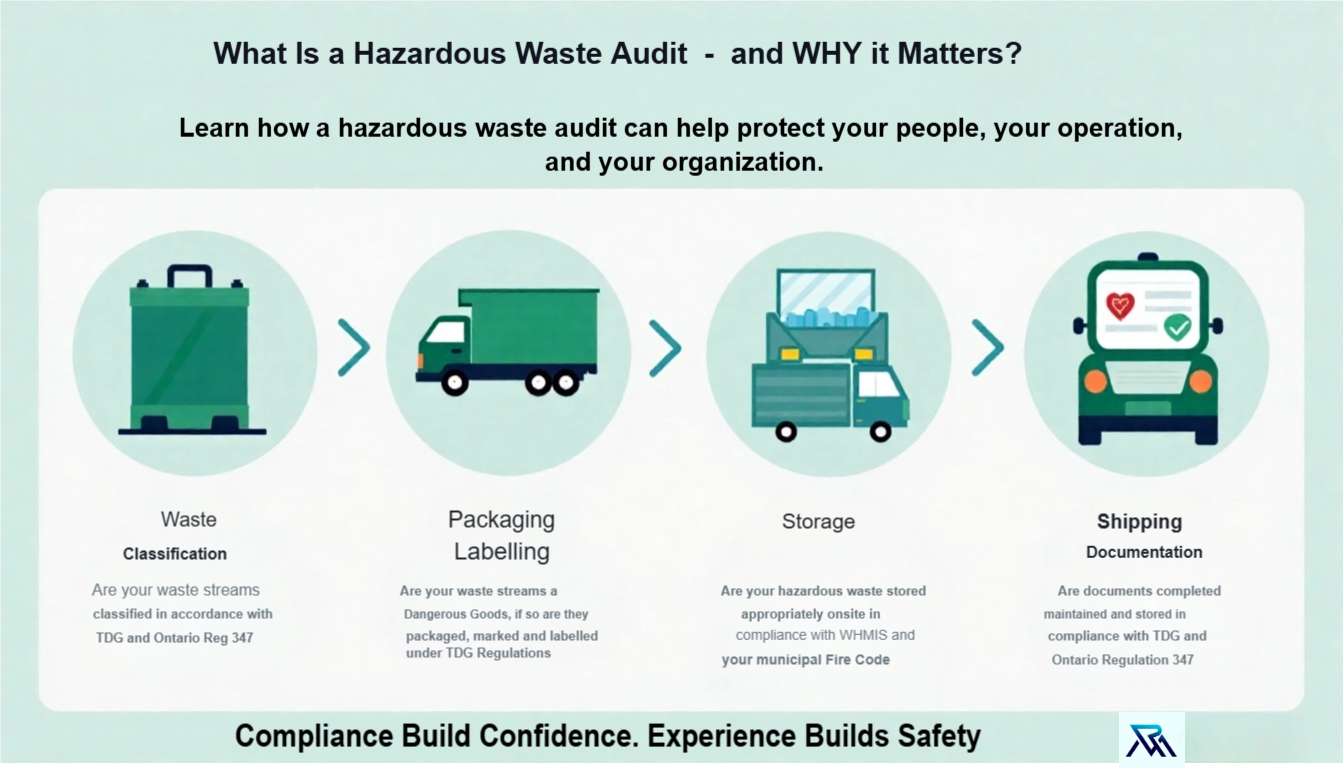
What a Hazardous Waste Audit Reviews
A comprehensive hazardous waste audit typically examines:
1. Waste Identification and Classification
Are all waste streams properly identified as subject or non-subject waste?
Have hazardous waste numbers been correctly assigned under Regulation 347?
Are waste classifications consistent with both provincial and federal requirements?
2. Packaging, Marking, and Labelling
Are containers suitable for the waste being generated?
Are markings and labels compliant with Ontario Regulation 347 and TDG, where applicable?
Are incompatible wastes properly segregated?
3. Storage Practices
Are storage areas designed and managed to prevent leaks, reactions, or exposure?
Are time limits, signage, and secondary containment requirements being met?
Do storage practices align with both regulatory and safety expectations?
4. Shipping and Disposal Documentation
Are shipping documents completed accurately and consistently?
Are TDG shipping papers aligned with the actual waste being transported?
Are manifests, bills of lading, and disposal records properly maintained?
5. Training and Operational Alignment
Do workers understand why procedures exist — not just what to do?
Are internal procedures aligned with current regulations and actual site practices?