Most companies believe they are doing the right thing when it comes to waste classification.
They hire a disposal company.
They provide some information.
And they trust that the classification is being handled properly.
On the surface, that seems responsible.
But there is a critical misunderstanding that I see far too often:
**Waste classification is not something you can fully hand off.**
As the generator, you carry both the **legal responsibility** and the **moral responsibility** to understand your waste.
And more importantly…
**No one is in a better position than you to know how that waste was created.**
—
## The Problem Isn’t Negligence—It’s Misplaced Trust
In my experience, most companies are not trying to avoid regulations.
They are trying to do the right thing in the most efficient way possible.
They believe:
* “Our contractor handles waste every day”
* “They should know how to classify it”
* “This is the safest and most economical approach”
And in some cases, that works—especially when the disposal company has a strong understanding of the generator’s process.
But in many situations, the classification is based on **limited or incomplete information**.
The generator may not fully understand what details matter.
The contractor relies on what they are given.
And this creates a gap.
A gap where classification decisions are made without fully understanding the waste.
—
## Why “What It Is” Is Not Enough
When people classify waste, they often focus on physical and chemical data:
* Flashpoint
* pH
* Chemical composition
These are important.
But they are not the full picture.
The most important question is often overlooked:
👉 **How did this waste come to be?**
Was it:
* An unused or obsolete product?
* A contaminated material?
* A byproduct of a process?
That answer can completely change how the waste is classified under Ontario Regulation 347.
—
## A Common Example: Two Paints, Two Classifications
Consider this scenario:
Two waste paints:
* Similar composition
* Similar properties
* Same colour
* Same physical data
At first glance, they appear identical.
But:
* One is an **obsolete product** sitting in storage
* The other is a **waste generated from a production process**
Under Ontario’s classification system, these can lead to **different primary hazard classifications**.
This is where mistakes happen.
A disposal company may see two similar materials and assign the same classification based on data alone.
But without understanding the origin of the waste…
**The classification can be wrong—even if the data looks correct.**
—
## When Classification Is Wrong, the Risk Is Not Just Compliance
It’s easy to think of misclassification as a regulatory issue:
* Violations
* Rejected shipments
* Administrative corrections
But the real concern goes deeper.
**It’s safety.**
If a waste is not properly classified, the hazards may not be properly communicated.
And that means the people handling, transporting, or treating that waste may not fully understand what they are exposed to.
This is where risk becomes real.
I don’t think about fines first.
I think about the worker handling that drum—
unaware of what’s actually inside.
That’s not a paperwork issue.
**That’s an accident waiting to happen.**
—
## You Can’t Outsource Understanding
This does not mean you should stop working with disposal companies.
Far from it.
The goal is not to replace them.
The goal is to work with them more effectively.
And that starts with this mindset:
👉 **You are responsible for understanding your waste.**
That includes:
* What you know about the material
* How it was generated
* And just as important… what you don’t know
In some cases, the correct next step is not a classification decision.
It’s asking:
* Do we need additional testing?
* Are there unknown contaminants?
* Should we perform a TCLP analysis?
Acknowledging uncertainty is not a weakness.
It is part of responsible classification.
—
## What Changes When You Truly Understand Your Waste
When you move from guessing… to understanding:
* You stop second guessing your classifications
* You gain confidence in your decisions
* You can properly communicate hazards to your team
* You work more effectively with contractors
* And most importantly… you improve safety for everyone involved
There is a level of clarity and pride that comes with knowing you are handling your waste correctly.
—
## If You’re Not Sure—You’re Not Alone
Many professionals I speak with feel unsure about waste classification.
Not because they don’t care.
But because they were never taught how to think through it properly.
If that sounds familiar, I’ve put together a resource to help you take the first step:
👉 Stop Guessing Your Waste Classification
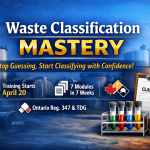
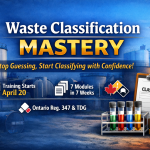
And if you want a structured, step-by-step approach, this is exactly what I teach inside my **Waste Classification Mastery** training—how to understand your waste streams based on how they are generated, not just what they look like on paper.
—
## Final Thought
Waste classification is not just about assigning a code.
It’s about understanding your materials well enough to:
* Handle them safely
* Communicate their hazards clearly
* And protect the people working with them every day
Because at the end of the day…
**This isn’t just about compliance.
It’s about making sure people go home safe.**