
Navigating the complexities of the Transportation of Dangerous Goods (TDG) Regulations can feel like a daunting task for any business. Whether you are shipping hazardous products to a customer or managing waste streams for disposal, compliance is not just a legal requirement—it is a critical component of workplace and public safety.
One of the most frequent questions we receive is: “What is actually required in TDG training to ensure my team is compliant?”
In this post, we’ll break down the core requirements for TDG training and what you need to do as an employer to meet the “competency” standard.
Understanding “Competency” in TDG
In the world of Canadian regulations, training is more than just sitting through a presentation. The TDG Regulations focus on competency, which means an employee must possess the specific knowledge, skills, and abilities to perform their job safely.
Under Part 6 of the TDG Regulations, employers are responsible for ensuring that any employee who handles, offers for transport, or transports dangerous goods is adequately trained.
The Two Pillars of TDG Training
To be truly compliant, your training program must cover two distinct areas:
- General Awareness: This provides a foundational understanding of the TDG Act and Regulations. It covers the nine hazard classes, the importance of safety marks, and how to use the TDG Handbook or Regulations.
- Function-Specific Training: This is where many programs fall short. Your employees need to be trained on the specific tasks they perform. For example, a person responsible for shipping waste needs to know how to properly classify that waste under Ontario Reg 347 and complete a waste manifest, whereas a driver needs to understand vehicle placarding and emergency response.
What Must Be Included in a Training Certificate?
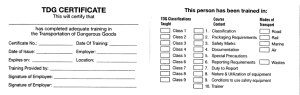
Once an employee is trained, the employer must issue a training certificate. This isn’t just a “participation” slip; it is a legal document that must include:
- The employer’s name and address.
- The employee’s name.
- The aspects of handling or transporting dangerous goods the employee is trained in.
- The expiry date (TDG certificates are typically valid for 3 years for road transport).
Remember, a person can only handle dangerous goods without a certificate if they are working under the direct supervision of a trained person.
The Cost of Non-Compliance
The consequences of inadequate training go beyond simple paperwork errors. We have seen real-world examples where logistics companies were fined upwards of $50,000 specifically for failing to provide adequate training, leading to environmental leaks and safety hazards.
How to Ensure Your Team is Ready
To keep your operations safe and compliant, consider these three steps:
- Audit Your Roles: Identify exactly who is “handling” or “offering for transport” and what specific tasks they do.
- Customize Your Training: Avoid “off-the-shelf” training that doesn’t address your specific products or waste streams.
- Keep Records: Always have up-to-date training certificates available for inspection.
If you’re unsure if your current training program meets the legal definition of “competent,” we’re here to help. At Mark Roehler Training Services, we specialize in customized regulatory training designed to make compliance easy and effective.
Ready to elevate your workplace safety? Book a call with me here to discuss a customized proposal for your team.