One of the biggest mistakes I see in hazardous waste classification is this:
People try to classify the waste before they truly understand how the waste was generated.
That usually leads to guessing. And guessing is dangerous when you are dealing with Ontario Regulation 347, TDG regulations, hazardous waste manifests, transportation requirements, and worker safety.
I have worked with companies for more than 40 years across environmental compliance, dangerous goods, hazardous waste, audits, and operations. And I can tell you this with confidence: the companies that consistently classify waste correctly are the ones that deeply understand their waste streams.
Classification starts long before you open Regulation 347.
It starts by understanding the process, the raw materials, the contamination sources, the reactions taking place, and what changed to create the waste in the first place.
Why Understanding the Process Matters So Much
Two drums can look identical sitting beside each other on a shipping dock.
Same color. Same smell. Same appearance.
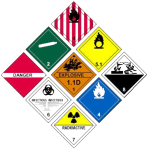
But one may be a corrosive subject waste regulated under Ontario Regulation 347 and a Class 8 dangerous good under TDG, while the other may not.
The difference is often hidden inside the process that created it.
That is why simply looking at a waste profile sheet from a disposal company or relying only on a generic SDS often is not enough.
You need to know:
- What raw materials went into the process
- What contaminants may now be present
- Whether reactions or heat changed the chemistry
- If incompatible materials mixed together
- Whether the waste characteristics changed during storage or handling
- If the waste could create transportation risks under TDG regulations
This is where many facilities struggle quietly.
The person responsible for classification is often trying to piece things together from old spreadsheets, outdated SOPs, incomplete SDSs, disposal company assumptions, and tribal knowledge from employees who may no longer even work there.
And deep down, they are thinking:
“I hope we classified this correctly because if we didn’t, it could come back on us during an audit, shipment rejection, spill, or incident.”
That pressure is real.
Most people handling hazardous waste did not step into these roles because they love regulations. They stepped into them because they are dependable, detail-oriented, and the people others trust when something important could go wrong.
Generic Training Cannot Solve a Facility-Specific Problem
This is one of the reasons generic hazardous waste training often falls short.
It teaches broad regulatory concepts, but it rarely teaches employees how to apply those concepts to their actual waste streams.
That is the disconnect.
Because your waste streams are not generic.
Your operation has its own:
- Production processes
- Cleaning methods
- Chemical mixtures
- Maintenance activities
- Off-spec products
- Residual contamination
And all of those factors directly impact classification.
When employees understand their own waste generation process, classification starts making sense. The regulations stop feeling random. Confidence improves. Mistakes decrease. Conversations with carriers and disposal companies become stronger and more informed.
Proper classification is not just about compliance.
It directly impacts packaging, labels, manifests, shipping documents, emergency response information, storage requirements, worker protection, and environmental risk.
The Companies Doing This Will Ask Better Questions
The best waste classification programs I have seen are not built around memorizing regulations.
They are built around asking the right questions consistently.
Questions like:
- What exactly generated this waste?
- What chemicals or contaminants could reasonably be present?
- Could the process create ignitability, corrosivity, reactivity, or toxicity concerns?
- Has this waste changed since the last time it was classified?
- Would this material create transportation risks if released during transport?
That is what creates consistency.
Not shortcuts. Not assumptions. Not hoping the disposal company “has it covered.”
Understanding Creates Confidence
One of the best moments during training is when someone suddenly realizes they finally understand why their waste is classified the way it is.
You can see the shift happen.
They stop second-guessing themselves.
They stop relying completely on outside opinions.
And they begin making decisions with clarity instead of uncertainty.
That confidence matters because these regulations affect real people, real shipments, real environmental risks, and real consequences.
Final Thought
If you want to classify waste correctly, start by understanding the waste stream itself.
Not just what the waste looks like.
Not just what someone else told you.
Understand how it was generated, what changed during the process, what hazards may exist, and how those hazards impact both waste regulations and transportation requirements.
Because when you truly understand your waste stream, classification stops being a guessing game and becomes a process you can defend with confidence. ✅
:contentReference[oaicite:0]{index=0}